
Credit: iStock
As you move into your 50s and beyond, maintaining muscle mass, bone strength, balance, and mobility becomes increasingly important. Age‑related changes can make daily activities more challenging and increase the risk of falls and injury. However, engaging in the right strength training routine can help counteract these effects and improve your healthspan, the period of life spent in good health. According to research, resistance training can enhance muscle function and metabolic health in older adults.
Below are four targeted strength exercises that support functional strength, balance, core stability, and overall longevity.
How to Use These Exercises
These four movements can be performed together in a single workout or split across two shorter sessions. Ideally, aim for:
- 2–3 full‑body workouts per week
- 3–4 sets of 8–12 reps per exercise
- 1–2 minutes of rest between sets
- Focus on technique first, then gradually increase intensity
A well‑rounded strength routine not only builds muscle, but also improves balance and coordination critical factors in reducing fall risk as you age.
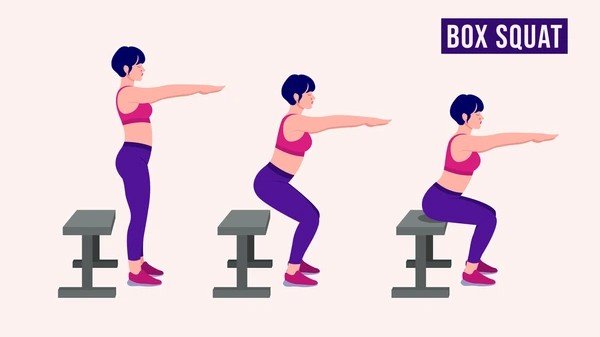
1. Sit‑to‑Stand (Box Squat)
Credit: Shutterstock
Why It Matters
Standing up from a seated position is a fundamental movement in daily life, whether getting out of a chair, car, or bed. The sit‑to‑stand trains your quadriceps and glutes, essential for independence and lower‑body strength.
How to Do It
1. Sit tall on a sturdy chair or box with feet hip‑width apart and toes under knees.
2. Lean forward slightly from your hips while keeping your chest open.
3. Drive through your heels and stand up without using your hands.
4. Fully extend your hips at the top.
5. Lower yourself back down slowly and controlled.
Tip: If you need stability, initially keep hands lightly on the chair for balance, then progress to no‑hand reps.
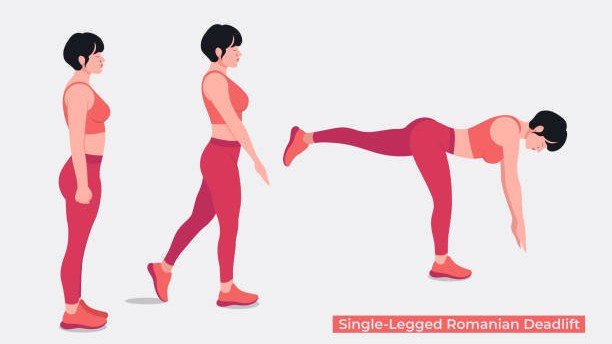
2. Single‑Leg Romanian Deadlift (RDL)
Credit: iStock
Why It Matters
The single‑leg RDL strengthens the posterior chain glutes, hamstrings, and lower back while challenging balance and coordination. These qualities are vital for safer walking and reduced risk of imbalance.
How to Do It
1. Stand tall on one leg with a slight bend in the knee.
2. Hinge from the hips and reach toward the floor as your opposite leg extends straight behind you.
3. Keep your hips level and spine neutral.
4. Pause at the bottom.
5. Return to standing by squeezing your glutes and hamstrings.
This movement improves unilateral control and helps correct strength imbalances between sides.
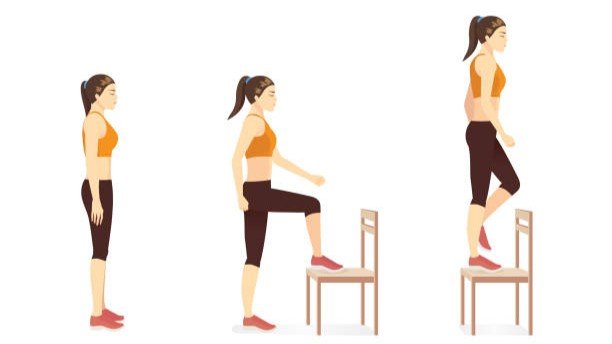
3. Step‑Up With Optional Knee Drive
Credit: iStock
Why It Matters
Step‑ups mimic everyday movements like climbing stairs or stepping onto curbs. Adding a knee drive enhances power, balance, and hip control, all key components of functional fitness.
How to Do It
1. Stand in front of a sturdy step or platform (start with 6–12 inches).
2. Place your right foot fully on the step.
3. Drive through the foot on the step and stand up.
4. At the top, lift your left knee toward hip height for added core engagement.
5. Step back down slowly and repeat on the other leg.
This exercise trains the entire lower body and improves stepping mechanics for daily mobility.
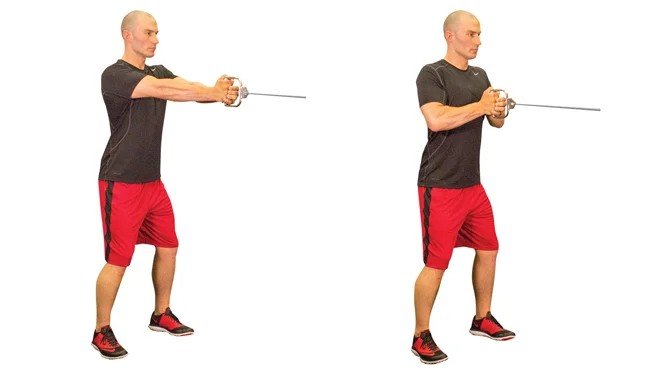
4. Pallof Press (Anti‑Rotation Core Stability)
Credit: Wiifreear
Why It Matters
Strong core stability helps protect your spine and supports better posture and balance. The Pallof press is an anti‑rotation exercise that trains your core to resist unwanted twisting, a major factor in preventing falls and enhancing functional strength.
How to Do It
1. Anchor a resistance band at chest height.
2. Stand sideways to the anchor, feet shoulder‑width apart.
3. Hold the band at your sternum and engage your core.
4. Press the band straight out in front of you.
5. Hold briefly without letting your torso rotate.
6. Return to your chest and repeat.
7. Switch sides when you finish.
Focused core work like this supports trunk control and stability in everyday movements.


